Showing posts with label Jaguar. Show all posts

Jaguar C-XF Concept

Jaguar C-XF Concept
Jaguar C-XF Concept
Jaguar C-XF Concept
The C-XF's design team took inspiration from some of Lyons' greatest cars, including the 1950 Mark VII and 1959 Mark 2 saloons. Their beautiful flowing lines were influenced by some of the great sporting Jaguars of the era including the XK120 and both display that extraordinary feeling of latent power that so signifies a Jaguar.

Jaguar XJ 2.7 Diesel

Jaguar XJ 2.7 Diesel

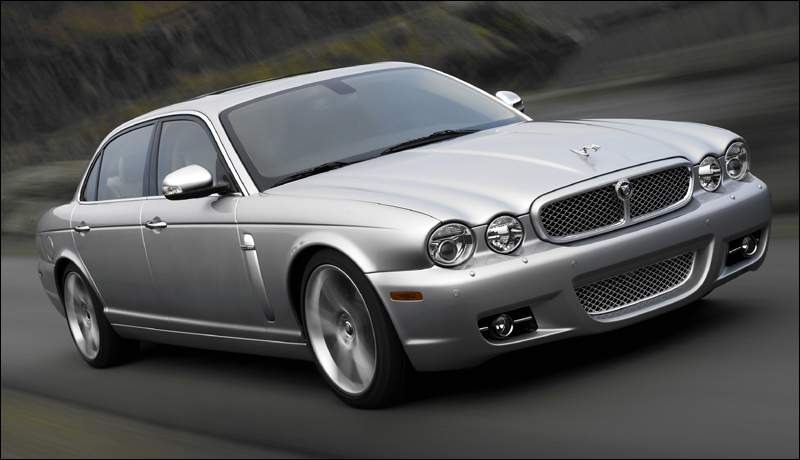
Jaguar's renowned Computer Active Technology Suspension (CATS) uses computer technology and sensor feedback to automatically adjust damper settings. The result is a unique combination of agile handling, outstanding ride comfort and excellent driver control.

Noise intrusion into the cabin is reduced to a remarkably low level with the Integrated Acoustic Damping System. This uses high acoustic absorption on the underside of the bonnet, airtight seals between the bonnet and engine compartment and a new double-skin bulkhead structure to dramatically reduce engine noise inside the cabin.

Jaguar C-Type

Jaguar C-Type
Jaguar C-Type
Jaguar C-Type
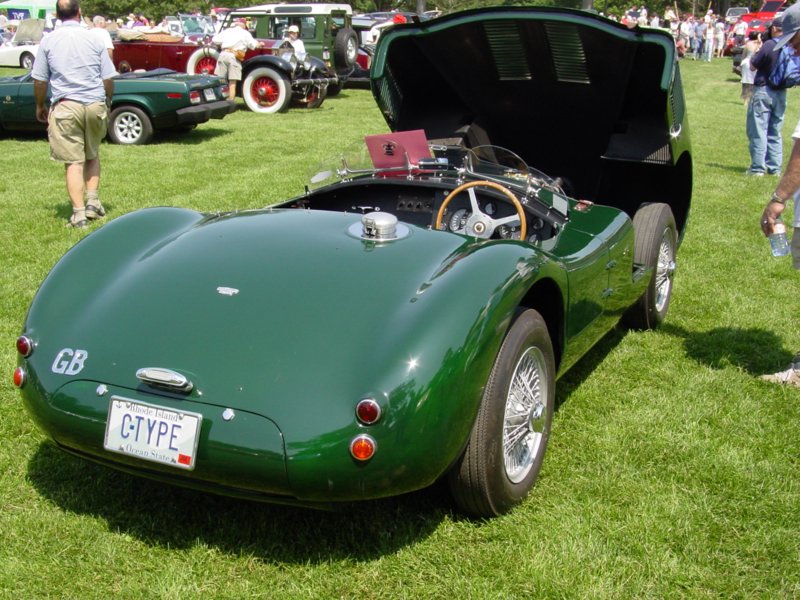
The Jaguar C-Type (also called the Jaguar XK120-C) is a racing car built by Jaguar and sold from 1951 to 1953. Its aerodynamic body was designed by Malcolm Sayer, its lightweight, multi-tubular, triangulated frame designed by Bob Knight. A total of 52 were built. The "C" designation stood for 'competition', there being no A- or B-Type Jaguars.

Jaguar XJ

Jaguar XJ
Jaguar XJ
Jaguar XJ
The all-new Jaguar XJ's distinctive lines mark the next bold evolution of Jaguar's new design language. The striking elongated teardrop shape of the side window graphic establishes the car's streamlined profile, and is balanced by a dramatic lower swage line emanating from the front wheels that reinforces the vehicle's forward stance. The new Jaguar XJ's sleek lines are complemented by a taut waistline, which further accentuates the impression of length and elegance and creates a natural tension as it fades from the front arch into the middle section of the car before reappearing as a strong haunch towards the rear.

Jaguar XKR

Jaguar XKR
Jaguar XKR
Jaguar XKR
The impressive fuel economy for such powerful cars is attributable to the combination of the XK range's lowest-in-class weight and the all-new AJ-V8 Gen III engines. As well as the intrinsic advantages of the engines' light weight, these advanced all-aluminium four-cam power units have a number of features that deliver power with very high efficiency, including spray-guided direct injection (SGDI), which improves performance and economy, and dual independent variable cam timing (DIVCT), which benefits performance and economy, while also reducing emissions.

Jaguar XF

Jaguar XF
Jaguar XF
Jaguar XF The XF is much more aerodynamic and beautifully styled than the cars it competes with – the Mercedes-Benz E-Class and BMW 5 Series. It’s a true four-door sedan that has more in common with the M-B CLS 500.

Enter the XF and you’re immediately struck with a problem. How do you drive the thing? First, there’s a pushbutton start/stop button that senses the presence of the key fob in your pocket.

But there’s no gearshift lever anywhere. All there is, is a BMW iDrive-style rotary dial sitting on the console that rises out of the console when the engine starts. But wait! The labels around this dial read PRNDL. This is the “gear lever.” It’s the first practical change to lever-style shifting since the Edsel’s pushbutton drive. And it’s so practical, even though I still had to think every time I wanted to shift at the end of our test week.