Showing posts with label McLaren. Show all posts

McLaren M6GT

McLaren M6GTMcLaren M6GT
McLaren M6GTMcLaren M6GT

McLaren M6GTMcLaren M6GT

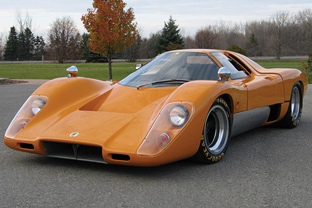
Two M6GTs were later converted to road cars, one of which became Bruce McLaren's personal transport. The company's plan to homologate it for the FIA's Group 4 regulations was however never completed, and only a few M6GT prototypes were finished by McLaren and Trojan. The M6 name was later used in the development of a closed-cockpit sports car for the 24 Hours of Le Mans and known as the M6GT.

After the McLaren M6A were replaced by the M8A in preparation for 1968, McLaren and technical partner Trojan developed the M6B which was sold to customers for use in Can-Am as well as other racing series. As a replacement for the team's M1Bs from 1966, the Chevrolet-powered McLaren M6A's improved design earned Bruce McLaren and his team their first of multiple Can-Am championships. The McLaren M6A was a racing car developed by driver Bruce McLaren and his Bruce McLaren Motor Racing team for their entry in 1967 Can-Am season.

McLaren F1

McLaren F1McLaren F1

McLaren F1McLaren F1

McLaren F1McLaren F1

McLaren F1McLaren F1
The bespoke engineered engine for the McLaren F1 is called the BMW S70/2. At 266 kg (586 lb), the resulting engine was slightly heavier than Murray's original maximum specification weight of 250 kg (551 lb) but was also considerably more powerful than he had specified. The final result is a custom-built 6.1 L (6064 cc) 60-degree V12 with an aluminium alloy block and head, 86 mm (3.4 in) x 87 mm (3.4 in) bore/stroke, quad overhead camshafts for maximum flexibility of control over the four valves per cylinder and a chain drive for the camshafts for maximum reliability, the engine is dry sump. Murray initially approached Honda for an NA powerplant with 550 bhp (410 kW; 560 PS), 600 mm (23.6 in) block length and total weight of 250 kilograms (550 lb).

Turbochargers and superchargers increase power but they increase complexity and can decrease reliability as well as introducing an additional aspect of latency and loss of feedback, the ability of the driver to maintain maximum control of the engine is thus decreased. Gordon Murray insisted that the engine for this car be naturally aspirated to increase reliability and driver control.

McLaren F1 GTR

McLaren F1 GTRMcLaren F1 GTR

McLaren F1 GTRMcLaren F1 GTR

McLaren F1 GTRMcLaren F1 GTR

McLaren F1 GTRMcLaren F1 GTR

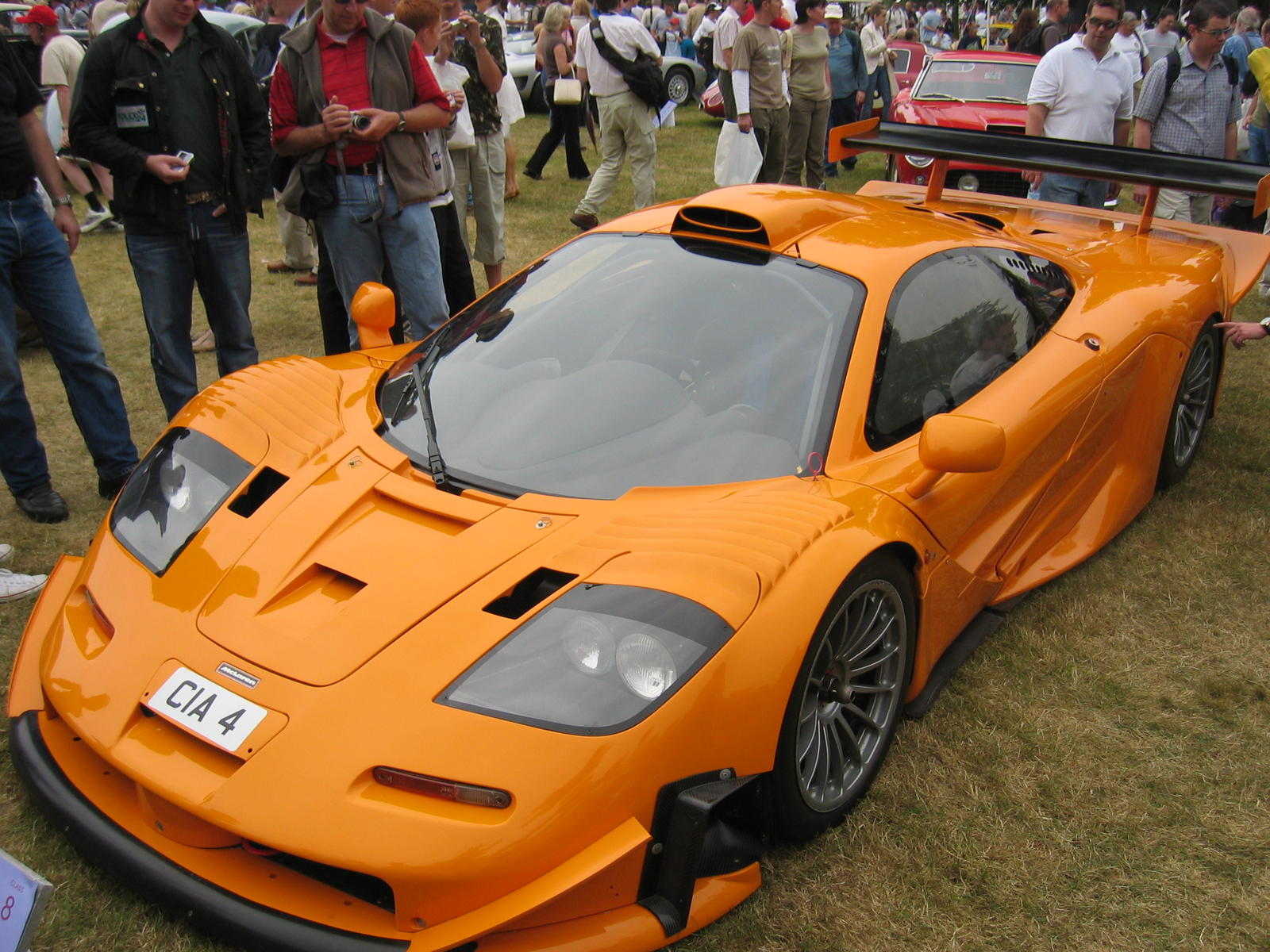
The weight was reduced to a total of 910 kg. A total of ten McLaren F1 GTR '97s were built. Due to the heavily modified bodywork, the McLaren F1 GTR '97 is often referred to as the "Longtail" thanks to the rear bodywork being extended to increase rear downforce.

The engine was slightly destroked to 6.0L instead of the previous 6.1L. Weight was further reduced and a sequential transaxle was added. McLaren F1 GTR '97 With the F1 GT homologated, McLaren could now develop the McLaren F1 GTR for the 1997 season. The weight was reduced with around 100 kg from the 1995 GTR edition and the engine was kept detuned at 600 HP to comply with racing regulations.

The car was driven by David Brabham and John Nielsen. McLaren F1 GTR '96 chassis #14R is notable as being the first non-Japanese car to win a race in the All-Japan Grand Touring Car Championship (JGTC). Nine more F1 GTRs were built to 1996 spec, while some 1995 cars were still campaigned by privateers. To follow up on the success of the McLaren F1 GTR into 1996, McLaren further developed the '95 model, leading to a size increase but weight decrease.

McLaren MP4-12C

McLaren MP4-12CMcLaren MP4-12C

McLaren MP4-12CMcLaren MP4-12C

McLaren MP4-12CMcLaren MP4-12C

McLaren MP4-12CMcLaren MP4-12C

Incorporating the leading edge technologies that the McLaren Group has built up within its various companies, I believe we are now perfectly placed to open up this new chapter in McLaren's history as well as play a part in the regeneration of high-tech manufacturing in the UK and global automotive environment," he concluded. "We began designing and building cars for aficionados of thoroughbred sports cars almost 20 years ago. "It is a long-held dream of mine to launch a range of high performance sports cars that set new standards in the industry," said Dennis. McLaren Automotive now looks to the future with a new range of revolutionary sports cars.

Through a rich modern history, McLaren's automotive division has already built the world's most critically acclaimed supercar, the McLaren F1 (1993-1998) and the world's best-selling luxury supercar, the Mercedes-Benz SLR McLaren (2003-2009). The rules in the sports car world are about to be re-written. Twenty years of sports car design, engineering and production combined with inspirational success in Formula 1 have driven Ron Dennis, McLaren Automotive Chairman, to announce his plans for the ultimate line-up of technology-led and customer-focused performance cars for the 21st century. The 12C, and future models within the range, will challenge the world's best sports cars, benefiting from the expertise and virtuosity of the McLaren Group.

The McLaren MP4-12C is revealed as the first in a range of high-performance sports cars from McLaren Automotive, the independent car division based at the McLaren Technology Centre in Woking, England.